


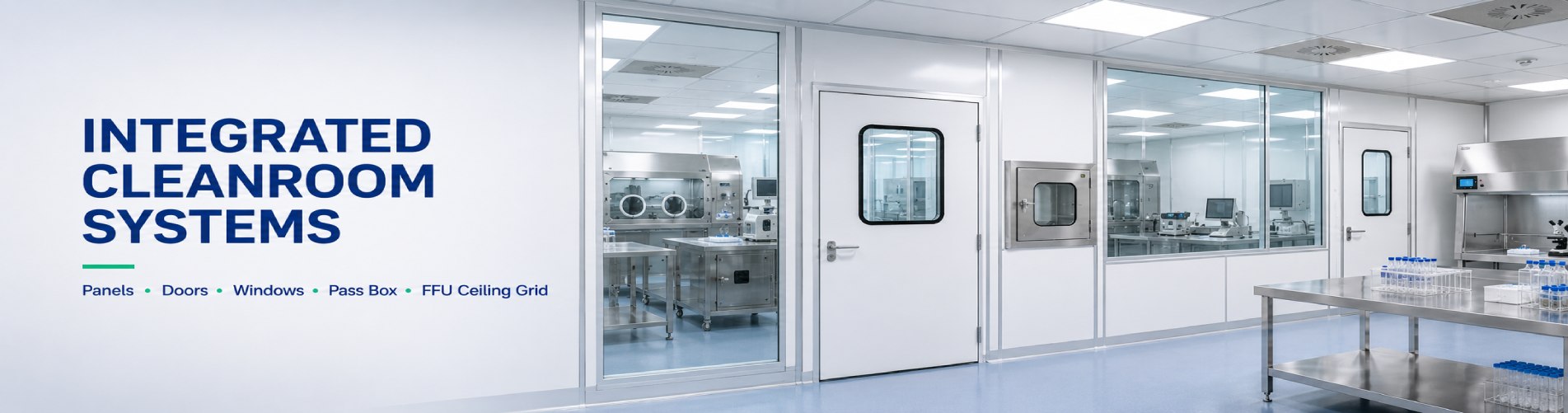
Cleanroom Door Safety Systems Guide: Choosing Cleanroom Doors Interlocks, HPL Door, and Emergency Exit Solutions for ISO/GMP Projects
For ISO/GMP cleanroom projects, door safety systems should be selected by workflow risk, pressure stability, and cleaning requirements rather than appearance alone. A durable HPL door can support cleanable access in controlled areas, properly planned clean room emergency exits can balance safety evacuation with sealed construction, and reliable cleanroom doors interlocks can help reduce wrong-door opening, pressure loss, and cross-contamination during daily operation.
Why Should Cleanroom Door Selection Start from Workflow Risk?
Cleanroom door selection should start from workflow risk because every door opening changes air movement, room pressure, and contamination exposure. In ISO Class 5 local protection areas, ISO Class 7 production rooms, and ISO Class 8 background zones, the door system must support personnel entry, material movement, emergency escape, cleaning routines, and pressure recovery at the same time. A door that looks acceptable on a drawing can still create problems if it is not coordinated with the air shower, pass box, cleanroom partition, and HVAC pressure cascade.
The technical purpose of cleanroom doors is to protect the controlled route between clean and less-clean areas. The official ISO 14644 cleanroom classification framework defines air cleanliness by particle concentration, while GMP-oriented projects also require practical contamination prevention during routine operation. For buyers and project managers, this means door material, sealing method, observation window, interlock logic, emergency release, and cleaning access should be reviewed before procurement.
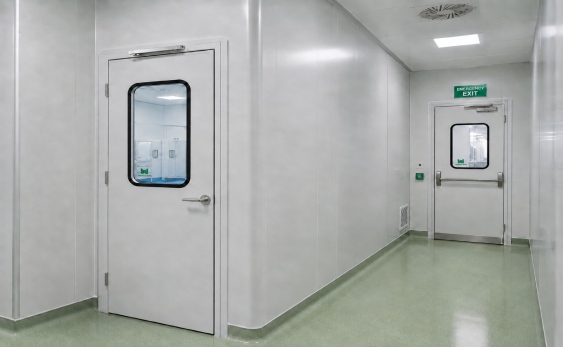
What Makes an HPL Door Suitable for ISO/GMP Cleanroom Areas?
An HPL door is suitable for many ISO/GMP cleanroom areas when the project needs a cleanable surface, corrosion resistance, stable appearance, and good compatibility with modular wall panels. HPL surfaces are commonly considered for controlled corridors, gowning rooms, buffer rooms, laboratories, food processing areas, and pharmaceutical support zones where frequent cleaning and visual consistency matter. The key is to match the door panel, frame, hinges, lockset, and observation window with the room’s cleaning frequency and pressure requirement.
Buyers should check whether the HPL door has a sealed frame, smooth panel surface, flush observation window, and cleanable edge details. For rooms operating around 20–24°C and 45–60% relative humidity, the door should remain dimensionally stable and easy to maintain. If the door is used near air showers, pass boxes, or pressure-controlled corridors, the closing force and sealing line should also be reviewed to avoid air leakage and repeated field adjustment.
How Can Clean Room Emergency Exits Balance Safety and Cleanroom Control?
Clean room emergency exits should be planned as safety-critical doors that also respect cleanroom pressure, sealing, and cleaning requirements. In a controlled environment, emergency exit doors cannot be treated like ordinary building doors because they may sit between pressure zones, production rooms, or clean corridors. The door must allow rapid escape in an emergency while helping limit routine air leakage during normal operation.
Project teams should verify emergency release direction, panic hardware compatibility, gasket continuity, door closer performance, and alarm or access-control logic. The door should support emergency evacuation without making everyday pressure balancing unstable. In many ISO/GMP layouts, 10–15 Pa differential pressure between adjacent zones is used to guide airflow from cleaner areas toward less-clean areas, so emergency exit sealing and closing reliability should be checked during commissioning.
Why Do Cleanroom Doors Interlocks Matter for Contamination Control?
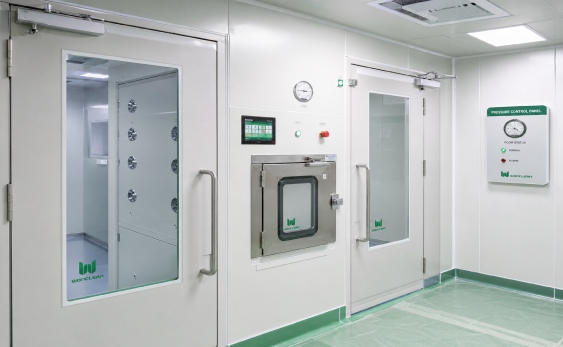
Cleanroom doors interlocks matter because they help prevent two connected doors from opening at the same time. This is important in air showers, pass-through corridors, gowning rooms, material transfer routes, and pressure cascade areas where simultaneous door opening can cause pressure collapse and airflow reversal. A basic interlock prevents operational mistakes, while a more advanced system may coordinate access control, delay timing, emergency release, alarm signals, and door status feedback.
Buyers should not choose interlocks only by the number of doors. They should review the room function, personnel flow, material route, emergency logic, and cleaning procedure. For example, a gowning airlock may need a short delay to allow pressure recovery, while a material corridor may require door status indication and access authorization. Interlock logic should always include emergency release so that safety is not compromised by contamination-control rules.
Which Parameters Should Buyers Check Before Ordering Cleanroom Door Systems?
Buyers should check each door system by use case, sealing requirement, safety function, and risk if the wrong specification is selected. The table below gives a simplified selection view for project managers who need a fast but practical comparison before technical confirmation.
| System | Best Used For | Key Check | Risk If Ignored |
|---|---|---|---|
| HPL door | Clean corridors and labs | Flush window and sealed edge | Harder cleaning |
| Clean room emergency exits | Escape routes | Emergency release and closer | Safety conflict |
| Cleanroom doors interlocks | Airlocks and air showers | Delay and emergency override | Pressure loss |
| Door-partition interface | Modular cleanrooms | Frame sealing and alignment | Field rework |
What Common Procurement Mistakes Should Project Managers Avoid?
Project managers should avoid selecting cleanroom doors as isolated hardware because door performance depends on the surrounding system. A cleanroom door must work with the cleanroom partition, wall panel thickness, air shower, pass box, access control, HVAC pressure cascade, and cleaning routine. If these interfaces are not confirmed early, site teams may need to cut panels, adjust frames, change wiring, or modify interlock logic during installation.
Another common mistake is ignoring the difference between normal access and emergency use. A door that is rarely opened still needs reliable sealing, while an emergency exit must remain easy to release under abnormal conditions. The best specification is not always the most complex one; it is the one that matches room classification, traffic frequency, safety rule, and validation expectation with the fewest avoidable risks.
Can Wonclean Door Systems Be Coordinated with Modular Cleanroom Layouts?
Wonclean door systems can be coordinated with modular cleanroom layouts when the door schedule is reviewed together with wall panels, cleanroom partitions, ceiling interfaces, air showers, pass boxes, and HVAC pressure zones. This coordination can support faster installation because door openings, frames, observation windows, interlock wiring, and panel interfaces are considered before site assembly.
For buyers, the practical value is fewer unexpected conflicts during installation. A properly coordinated door system can support stable pressure recovery, smoother cleaning access, and safer personnel movement. It can also help project teams prepare a clearer commissioning route for ISO Class 7 or ISO Class 8 rooms where airflow direction, differential pressure, and access behavior must work together.


 บริการออนไลน์

