






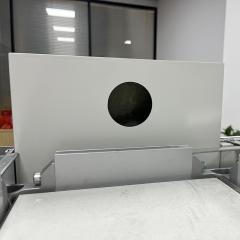
Case Study: Container Laboratory in America
What dictates the operational validation velocity of a prefabricated mobile containment environment deployed across high-purity North American biotech hubs? In this newly completed United States milestone, optimizing the baseline cleanroom sandwich panel framework required merging intermodal structural strength with factory-calibrated interior finishes. Reviewing our latest premium project case profile demonstrates that eliminating field framing gaps is the only way to safeguard continuous air barrier parameters. Sourcing a fully synchronized cleanroom partition system enclosure creates an unyielding interior shell capable of resisting continuous over-the-road transport shocks. Every assembled lot from Wonclean carries a certified international quality certificate portfolio, ensuring the complete turn-key infrastructure passes rigorous regional GMP regulatory inspections immediately upon arrival at the project site.
Why Do High-Purity HVAC Systems Dictate the Choice of Hardwall vs Softwall Cleanrooms for Mobile Blocks?
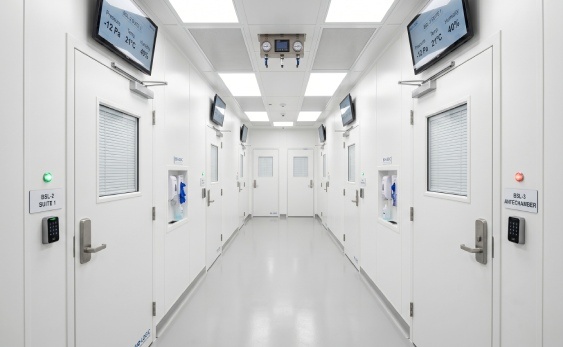
The absolute engineering core of this 20ft mobile laboratory case study is its high-capacity heating, ventilation, and air conditioning (HVAC) system layout. When designing a compact intermodal facility, evaluating the aerodynamic stability of hardwall vs softwall cleanrooms profiles is crucial. Flexible plastic strip curtains fail to hold the strict differential air pressure metrics necessary for biosafety containment. To resolve this, this project utilized premium double-glass magnesium wall layers locked into solid anodized aluminum tracks. This rigid hardwall partition setup permits a top-mounted Air Handling Unit (AHU) to continuously cycle air through G4 pre-filters and terminal HEPA blocks, keeping internal room positive pressure parameters perfectly stable between 0 and 60 Pascals without any envelope deflection leakage.
How Do Micro-Adjustable Motor Fan Blowers Keep Room Cleanliness Indicators Secure?
Maintaining a pristine indoor environment under changing field conditions requires active mechanical airflow compensation. The integrated cleanroom HVAC design utilizes smart electronically commutated motor blowers to balance internal air velocity vectors. This active ventilation array moves clean, laminar airflow downward into the working zone, driving out suspended airborne particulates through low-level wall return vents and keeping room status indicators securely between 0 and 35,000 counts per cubic meter.
| Engineering Specification Element | Wonclean Mobile Container System | Traditional On-Site Traditional Civil Build |
|---|---|---|
| Wall Envelope Foundation | Anti-Seismic Rigid Partition Wall Enclosures | Standard Stud Framing with Drywall Tape |
| Air Handling System Integration | Compact External AHU with EC Motor Blowers | Remote Plant Room via Massive Mechanical Ducts |
| Staging Deployment Timeline | Plug-and-Play Assembly (Under 48 Hours) | Multi-Month On-Site Structural Civil Works |
| Mobility & Asset Reusability | 100% Relocatable Intermodal Freight Chassis | Zero (Requires complete interior demolition) |
How Much Budget Allocation Is Required to Achieve a Class 100 Clean Room Cost Per Square Foot Target?
When planning a specialized modular facility upgrade, project managers must ask: can a mobile layout economically support a localized ultra-sterile zone matching class 100 clean room cost per square foot benchmarks? By zoning the internal container floor plan, our engineers integrated a high-density vertical laminar flow workbench directly beneath a secondary terminal filter array. This clever design lets the main room operate at a cost-effective Class 10,000 level, while creating a localized Class 100 zone for sensitive product handling. This smart zoning cuts initial equipment costs and ongoing utility consumption by up to 35% compared to building a massive, single-zone static facility.


 บริการออนไลน์

