



Modular Cleanroom Infrastructure: Cleanroom Sandwish Panel, Cleanroom Ceiling Grid, and Container Laboratory Systems for Faster ISO/GMP Delivery
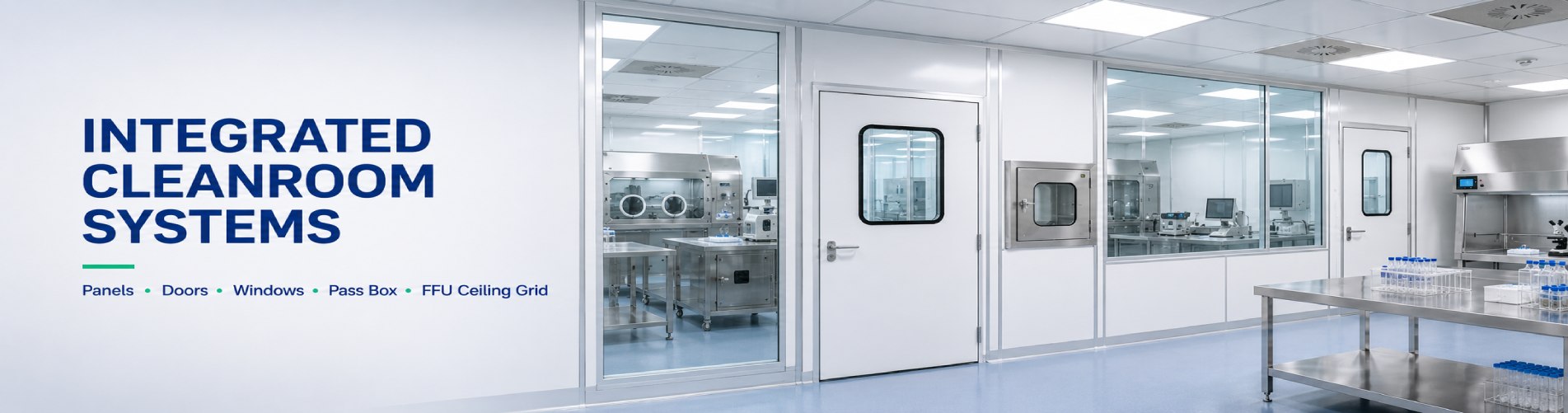
For the Southeast Asia Modular Cleanroom Upgrade Project, the fastest path to ISO Class 7 / ISO Class 8 and GMP Grade C/D readiness is not only selecting one product, but coordinating the full envelope system. Wonclean supports this approach by combining a high-stability cleanroom sandwish panel layout with a load-bearing cleanroom ceiling grid for FFU integration, while a prefabricated container laboratory option helps buyers reduce local construction delays, control installation dust, and improve long-distance transport stability.
Why Are ISO/GMP Projects Moving Toward Modular Cleanroom Infrastructure?
ISO/GMP cleanroom projects are moving toward modular infrastructure because project owners need shorter installation windows, cleaner on-site assembly, and more predictable validation preparation. For pharmaceutical, medical device, food, biotechnology, and semiconductor facilities, traditional wet construction often increases dust, labor dependency, and commissioning uncertainty. Modular cleanroom construction shifts more work into factory prefabrication, allowing wall panels, ceiling systems, doors, windows, air showers, pass boxes, HVAC interfaces, and electrical routes to be prepared before site delivery.
The technical foundation remains air cleanliness, pressure control, and contamination prevention. The official ISO 14644 cleanroom classification framework classifies air cleanliness by particle concentration, while GMP expectations for sterile and controlled manufacturing place strong emphasis on contamination control, personnel movement, material transfer, and cleanable surfaces. In practical engineering terms, this means the cleanroom envelope must support stable airflow, controlled differential pressure, and smooth internal finishes that can withstand repeated cleaning.
How Does a Cleanroom Sandwish Panel Control Leakage, Fire Risk, and Site Dust?
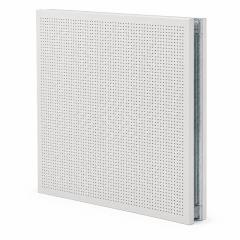
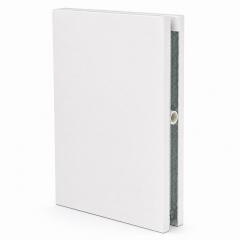
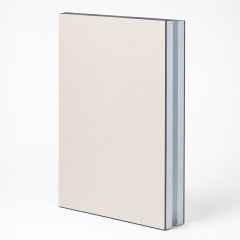
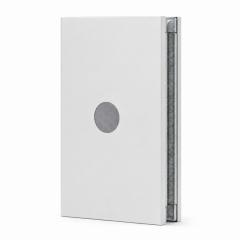
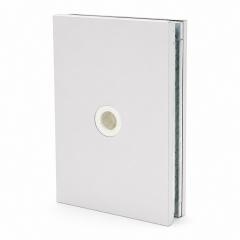
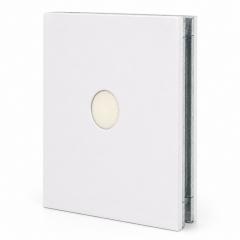
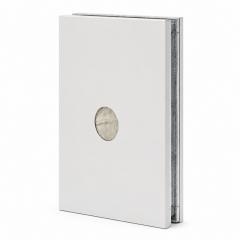
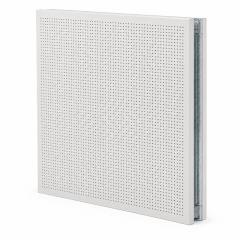
A cleanroom sandwish panel controls leakage and site dust by creating a prefabricated, flush, and easy-to-clean wall envelope that limits uncontrolled gaps during installation. In ISO Class 7 and ISO Class 8 cleanrooms, the wall system must help maintain room pressure, reduce particle traps, and resist frequent cleaning cycles. Wonclean panel systems can be configured with rock wool, magnesium oxide, aluminum honeycomb, or polyurethane cores according to fire resistance, flatness, insulation, and project cost requirements.
For GMP Grade C/D areas, the key panel decision is the relationship between the core material, joint treatment, door frame connection, window interface, and ceiling transition. Rock wool and magnesium oxide cores are often selected where fire performance is a priority, aluminum honeycomb supports lightweight flatness, and polyurethane can support thermal insulation when the room requires 20–24°C temperature control and 45–60% relative humidity.
What Makes a Cleanroom Ceiling Grid Critical for FFU Support and Airflow Stability?
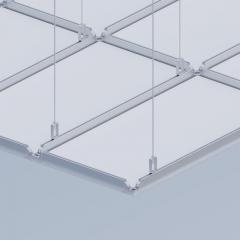
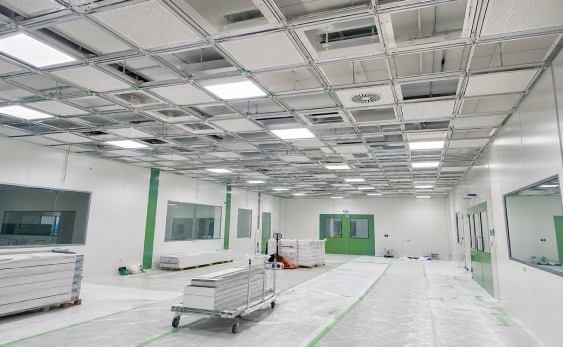
A cleanroom ceiling grid is critical because it directly affects FFU positioning, blank panel sealing, maintenance access, and airflow uniformity. In modular cleanroom projects, ceiling grids are not decorative profiles; they are structural interfaces that support FFU modules, lighting, ceiling blank panels, filters, and service access. A stable grid layout helps reduce vibration, prevent ceiling panel displacement, and maintain a predictable airflow path from the plenum into the controlled zone.
For common FFU ceiling configurations, 1200×1200 mm and 1200×600 mm grid modules are frequently used to coordinate filter units, lighting, and blank panels. When the grid is properly integrated with the wall panel system, the room can better support 10–15 Pa differential pressure between adjacent zones, helping reduce reverse airflow risk during personnel entry, material transfer, and production operation.
Which Project Scenarios Are Better Suited for a Container Laboratory?
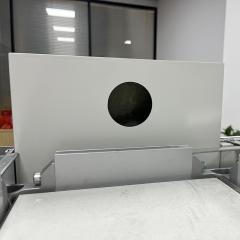
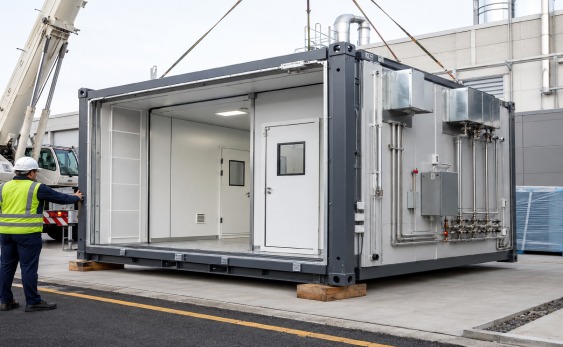
A container laboratory is better suited for projects that need fast deployment, outdoor placement, relocation flexibility, or reduced dependence on local construction resources. In Southeast Asia, the Middle East, the United States, Vietnam, Indonesia, and Europe, buyers often face limited site access, labor scheduling issues, or long approval cycles for traditional construction. A prefabricated container-based laboratory can integrate enclosure structure, HVAC, electrical routing, cleanroom doors, cleanroom windows, pass boxes, and monitoring points before shipment.
For long-distance transport stability, the container laboratory structure must consider vibration, lifting points, panel protection, equipment fixation, and field connection tolerances. Compared with fixed civil construction, a modular container laboratory can help preserve more reusable components, reduce demolition waste, and support phased capacity expansion when production demand changes.
What Technical Parameters Should Buyers Compare Before Procurement?
Buyers should compare cleanroom systems by engineering performance, not only by unit price. For ISO/GMP projects, the best procurement evaluation connects each component to measurable functions such as air changes, pressure stability, fire performance, cleanability, installation speed, and maintenance access.
| System | Function | Typical Specification | Benefit |
|---|---|---|---|
| Cleanroom sandwish panel | Wall envelope | Rock wool / MgO / honeycomb / PU core | Cleaner installation and better sealing |
| Cleanroom ceiling grid | FFU and ceiling support | 1200×1200 mm / 1200×600 mm | Stable airflow and easier maintenance |
| Container laboratory | Prefabricated lab module | Outdoor or relocatable structure | Shorter site work and flexible expansion |
| HVAC / air shower / pass box | Contamination control | ISO 7: 60–90 ACH; ISO 8: 15–30 ACH | Supports pressure and validation readiness |
How Can Wonclean Reduce Local Construction Delays and Validation Pressure?
Wonclean reduces local construction delay risk by coordinating factory prefabrication, modular cleanroom envelope design, HVAC integration, and digital control points before the system reaches the project site. This approach is especially useful when the buyer needs to limit dust generation during installation, protect production schedules, or avoid repeated rework during commissioning. Instead of treating walls, ceilings, doors, windows, air showers, and pass boxes as separate purchases, the modular system is planned as one connected cleanroom infrastructure package.
For ISO Class 7 / ISO Class 8 and GMP Grade C/D projects, this integrated method helps engineering teams prepare a more stable path toward airflow balancing, pressure testing, temperature control, humidity control, and operational readiness. The project result is not a shortcut around validation; it is a cleaner and more controlled construction method that helps reduce avoidable installation variables before qualification work begins.
The Wonclean modular cleanroom package helped our engineering team shorten on-site installation, keep panel joints clean, and prepare ISO Class 7 pressure balancing with fewer field modifications after long-distance shipment.
Project Engineering Manager, Southeast Asia Pharmaceutical Facility


 บริการออนไลน์

