






A cleanroom in Penang, Ho Chi Minh City or Jakarta faces a problem its counterpart in a temperate country never does: it must hit the same internationally recognised cleanliness numbers while sitting in 32 °C heat and humidity that can pass 80% for months at a time — and it usually has to be up and qualified far faster than a conventional build allows.
For many companies expanding across Southeast Asia, the answer is to stop building cleanrooms on site and start delivering them: mobile and containerized laboratories that are manufactured, fitted out and pre-tested in a factory, then shipped and connected. This article covers the regulatory baseline these labs must meet across ASEAN, the climate they have to defeat, and how a containerized design is actually put together to do both.

01 — The standards baseline
One particle standard, many national regulators
The good news for anyone deploying across the region is that the core technical yardstick is universal. Cleanliness is classified everywhere by ISO 14644-1, which sets the maximum airborne-particle counts per cubic metre for each ISO class. A lab specified to ISO Class 7 in Malaysia is, technically, the same target as ISO Class 7 in Vietnam. That shared baseline is what makes a standardised, factory-built lab viable in the first place.
The complication is regulatory, not technical. For pharmaceutical and medical work each country enforces its own Good Manufacturing Practice (GMP) regime through its own authority — and most, but not all, have aligned those regimes to the PIC/S GMP guide, which in turn tracks EU GMP including the demanding Annex 1 for sterile products. The practical effect is that the cleanroom hardware can be common, while documentation, qualification and inspection expectations vary by market.
| Market | Regulator | GMP framework |
|---|---|---|
| Singapore | HSA | PIC/S GMP |
| Malaysia | NPRA | PIC/S GMP |
| Indonesia | BPOM | PIC/S GMP (CPOB) |
| Thailand | Thai FDA | PIC/S GMP |
| Philippines | FDA Philippines | PIC/S GMP |
| Vietnam | DAV (Ministry of Health) | WHO-GMP / EU-GMP, aligning to PIC/S |
For electronics, semiconductor and R&D work the picture is simpler still: there is usually no national GMP layer, and ISO 14644 plus the customer’s own process specification governs. That is why a regional roll-out is often led by electronics and testing labs, where a single repeatable design clears every border.
02 — The climate problem
What the tropics do to a cleanroom
Meeting a particle count is only half the job in Southeast Asia. The bigger engineering challenge is the latent heat and moisture the air-handling system has to remove before the room is even usable. Three issues dominate:
- Dehumidification load. Outdoor air at 32 °C and 80%+ relative humidity carries enormous moisture. Pulling it down to a controlled cleanroom condition (often 45–60% RH) takes far more cooling and dedicated dehumidification than a temperate site, which drives HVAC sizing, energy use and running cost.
- Condensation and dew point. Where cool internal surfaces meet humid air — panel joints, door reveals, chilled-water lines — condensation can form. Standing moisture is a contamination and corrosion risk and must be designed out through insulation, vapour sealing and careful dew-point control.
- Microbial growth. Warm, damp conditions favour mould and bacteria. Surfaces have to be non-porous, fully sealed and cleanable, with no organic or fibrous materials exposed in the cleanroom envelope.
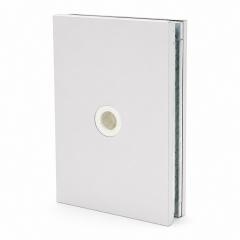
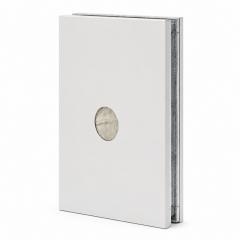
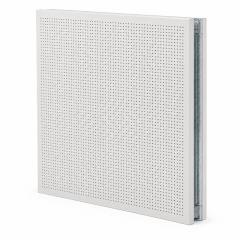
These pressures reward an envelope built from sealed, non-shedding cleanroom sandwich panels with coved, gap-free joints — and they make a factory-controlled build, where insulation and sealing are done under cover rather than in monsoon conditions, genuinely advantageous.
03 — The deployment case
Why mobile and containerized labs fit the region
Southeast Asia’s combination of fast-growing demand, fragmented sites and difficult climate is precisely where a containerized approach earns its place. A containerized laboratory is built inside a transport-standard steel shell, so it can be craned onto a truck or ship and moved between sites, countries or projects.
Schematic sequence — site duration depends on module count, services and qualification scope.
The advantages line up with the region’s realities:
- Speed. Because the shell, panels, ceiling, HVAC and filtration are built and tested in parallel with site civil works, on-site time drops from months to weeks.
- Relocatable capacity. A unit can serve a project in one country, then be shipped to the next — useful for contract manufacturers, testing campaigns and disaster or outbreak response.
- Factory quality in a harsh climate. Sealing, insulation and filter installation happen in a controlled plant, not in heat and rain, so the envelope that has to fight humidity is built right.
- Predictable logistics. Transport-standard dimensions move through ports and roads across ASEAN without special handling.
04 — Inside the box
Anatomy of a containerized cleanroom lab
A containerized lab is not a shipping container with a bench inside. It is a cleanroom engineered to fit, and survive transport in, a structural steel module. The exploded view below shows how the pieces stack:

The core elements are:
- Structural steel shell. Provides transport strength, weatherproofing and a mounting frame for everything inside.
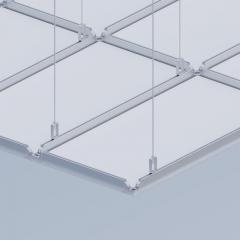
- Seamless cleanroom lining. Pre-installed wall and ceiling panels with coved corners create the smooth, sealed interior surface required for cleaning and particle control.
- Integrated HVAC and HEPA filtration. An onboard air-handling unit with HEPA filter bank delivers the air changes, pressure and — critically for the tropics — the dehumidification the room needs.
- Anti-static raised or finished flooring. Dissipative flooring protects sensitive work and supports airflow and cleaning.
- Sealed doors, vision windows and pass-throughs. Maintain the pressure cascade between clean and less-clean zones.
- Pre-run utilities. Power, water and data are routed during manufacture so site connection is fast and predictable.
This detachable, re-assemblable construction is an area Wonclean has invested in directly — its easy-to-disassemble container laboratory design is the subject of a granted Chinese invention patent — which matters when a unit may be opened, moved and re-sealed several times over its life.

05 — Getting it right
Specifying a lab for ASEAN deployment
A standardised product still has to be matched to a specific country, climate and process. The questions worth settling early are:
- Target class and regime. Fix the ISO 14644 class and whether national GMP (and Annex 1) applies, because that drives airflow, pressure and documentation.
- Climate design point. Specify HVAC and dehumidification against the site’s actual peak temperature and humidity, not a generic figure.
- Power and water reality. Confirm voltage, frequency and supply stability; many sites need an allowance for generator or buffer support.
- Logistics envelope. Check module dimensions and weight against the route, port and crane access at the destination.
- Qualification plan. Agree how IQ/OQ/PQ will be executed and documented for the destination regulator before the unit ships.
Key takeaways
- ISO 14644-1 gives a common cleanliness baseline across all of ASEAN, which makes standardised labs possible.
- GMP enforcement is national; most major markets follow PIC/S, so hardware can be common while paperwork varies.
- The tropical climate makes dehumidification, condensation control and microbial resistance the defining design loads.
- Mobile and containerized labs deliver factory-built quality and weeks-not-months deployment, and can be relocated between sites and countries.
- A containerized lab is a true cleanroom in a steel shell — sealed lining, integrated HVAC/HEPA, anti-static floor and pre-run utilities.
Deploying a cleanroom lab in Southeast Asia?
Wonclean designs, builds and pre-tests containerized and modular cleanroom laboratories for ASEAN climates and regulators — including patented detachable container designs. Tell us your target class, country and site conditions and our engineers will scope the HVAC, envelope and logistics for you.
FAQ


 บริการออนไลน์

